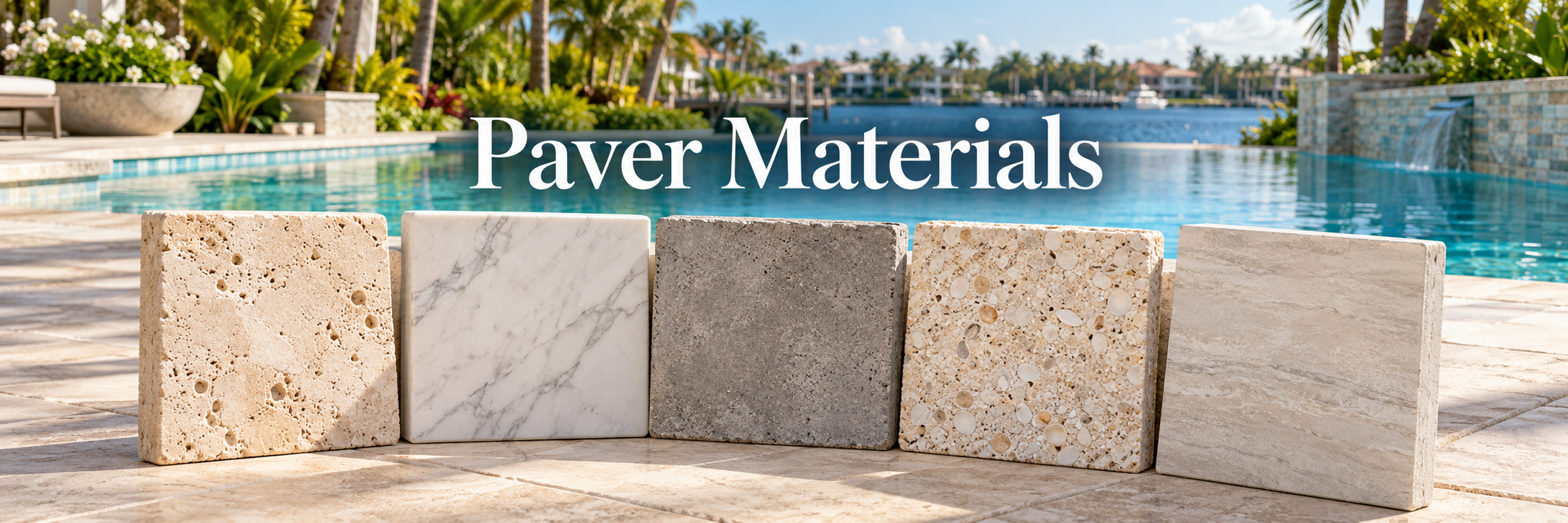
There’s no single “best” paver — just the right one for what you’re building, how you want it to feel underfoot, and what kind of upkeep fits your life. Here’s what you’re choosing between.
Travertine
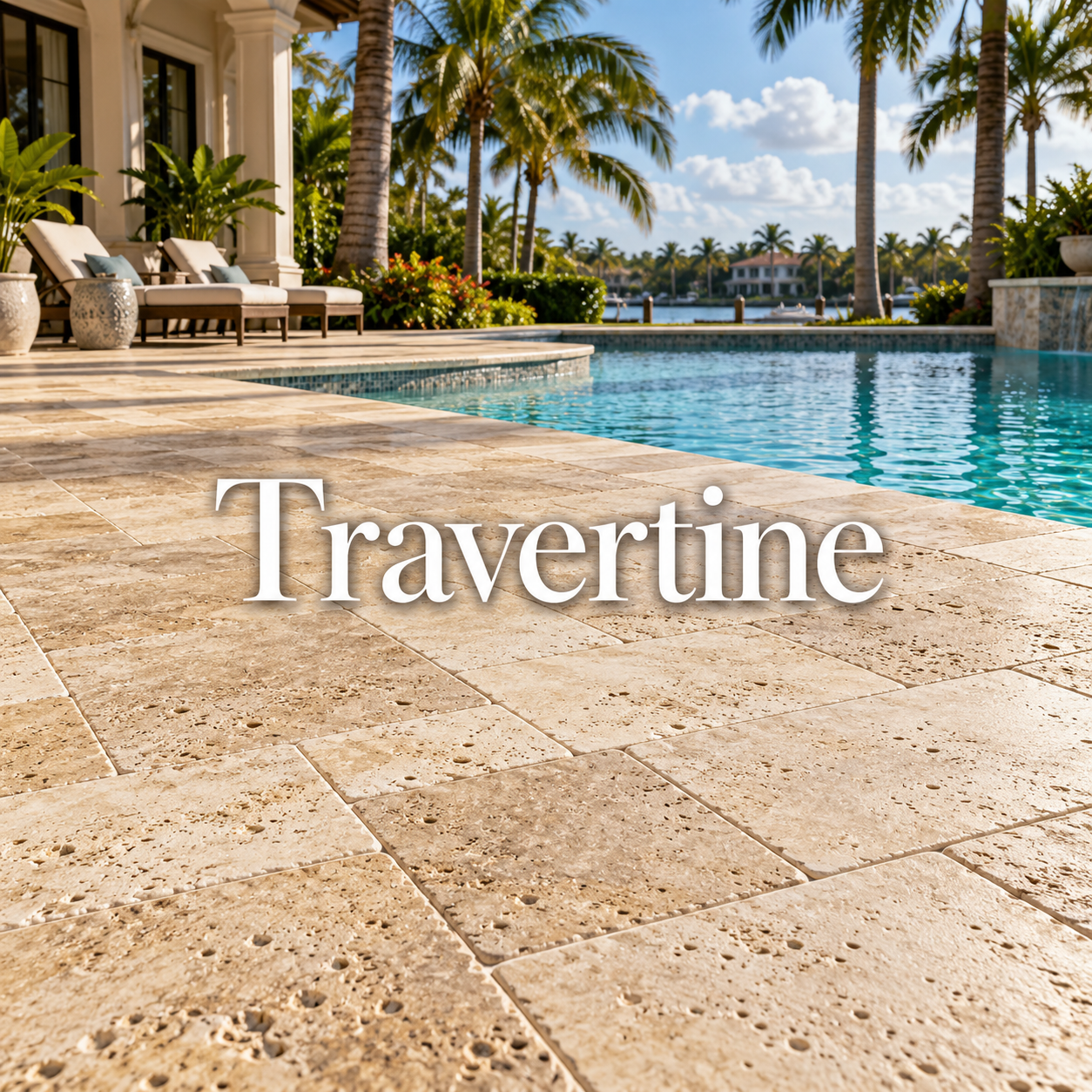
What It Is — Travertine is a real, natural stone, quarried straight from the earth in Turkey. Because it’s cut from stone rather than manufactured, every piece carries small natural imperfections — including tiny surface holes — that are simply part of what natural stone is.
The Feel — Travertine is one of the coolest and softest stones you can put underfoot, which matters more than you’d think on a hot pool deck. It comes in a range of shapes and sizes, and leans heavily into warm, earthy color tones — beige, khaki, browns, and off-whites.
Where It’s Used — Travertine is one of the most popular choices for pool decks, patios, and walkways, and it’s also a beautiful option for veneering raised walls on a pool feature or summer kitchen. It can be used on driveways too, if the pattern doesn’t exceed a 6″x12″ size.
Upkeep — Pressure clean as needed and seal with a natural stone penetrating sealer every couple of years to help protect the color from fading in Florida sun. One honest note that applies to any natural stone: a wet surface can be slippery regardless of the finish, so that’s worth keeping in mind around the pool.
Marble
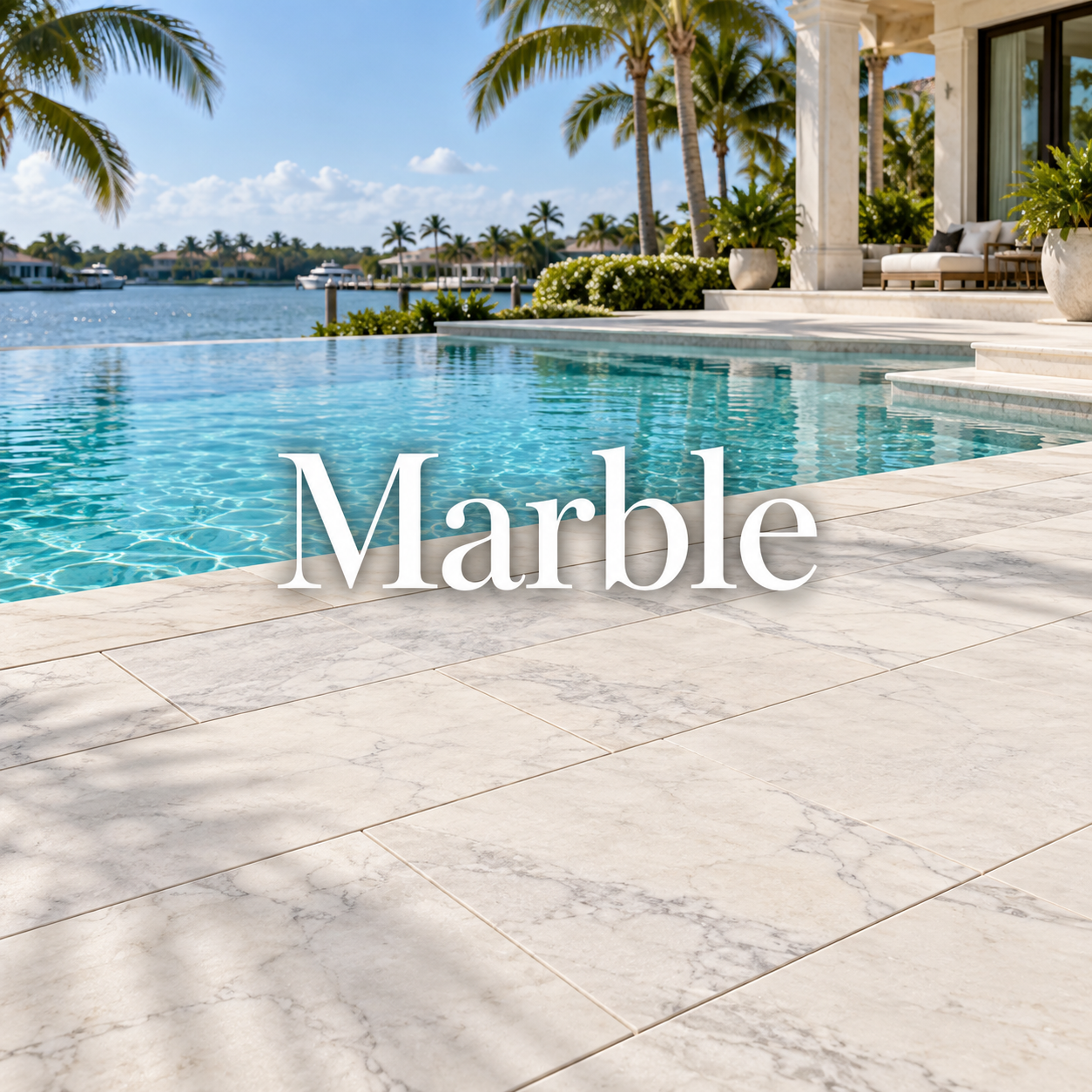
What It Is — Like travertine, marble is a real natural stone from the same Turkish quarries — but it comes out of the ground with a cleaner, more finished look, without travertine’s natural holes.
The Feel — Marble shares travertine’s cool, soft-underfoot quality, but with a wider color range that includes both earth tones and more modern whites and greys. Natural marble is slippery on its own, so it’s given a leathered or sandblasted finish for traction.
Where It’s Used — Marble is one of the most popular materials for pool decks, patios, and walkways, and it’s a beautiful choice for veneering raised pool walls. It is not used for driveways or any vehicle traffic — it’s simply too soft for that kind of weight.
Upkeep — Same routine as travertine: pressure clean as needed and seal every couple of years with a natural stone penetrating sealer. Marble is quite porous and can stain more easily than travertine, so sealing consistently is important. And as with any stone, a wet surface can be slippery no matter the finish.
Concrete Pavers
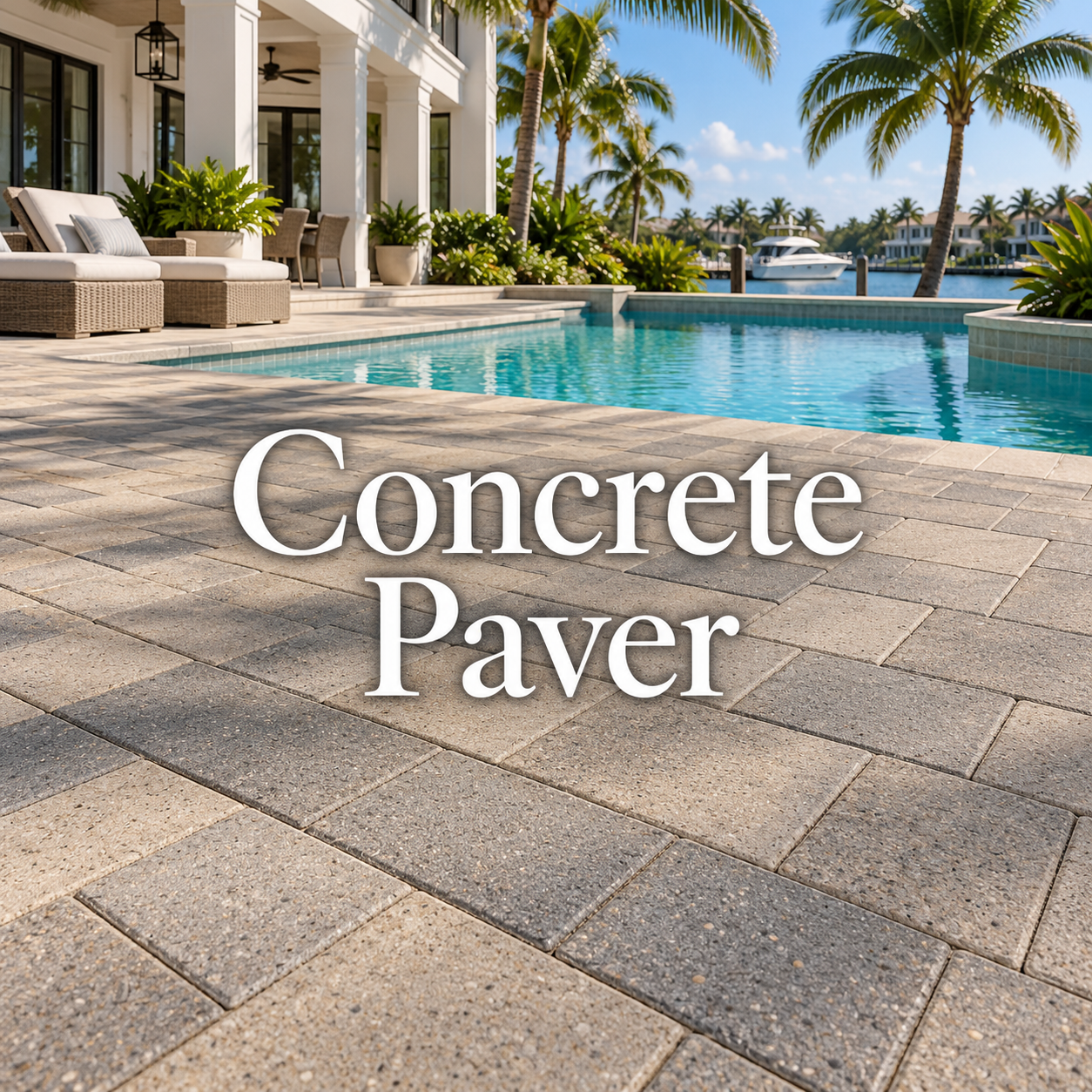
What It Is — Concrete pavers are the most cost-effective paver option, manufactured rather than quarried, which is why they come in such a large range of sizes, patterns, and colors.
The Feel — Concrete Pavers run warmer underfoot than natural stone, so on a pool deck or patio, lighter colors are worth choosing for comfort. On a driveway, darker colors work in your favor — they hide tire marks far better.
Where It’s Used — Concrete pavers are the go-to for driveways, pool decks, patios, and walkways. One real advantage over a poured concrete driveway: if a paver settles or sinks, it can simply be lifted and reset — a cracked concrete slab doesn’t give you that option.
Upkeep — Pressure clean as needed and seal every other year in areas that get full sun, to help slow color fading. One thing worth knowing: a pressure washer held too close or set too strong can erode the surface of the paver, so that’s a job worth doing carefully — or having done for you.
Porcelain Pavers
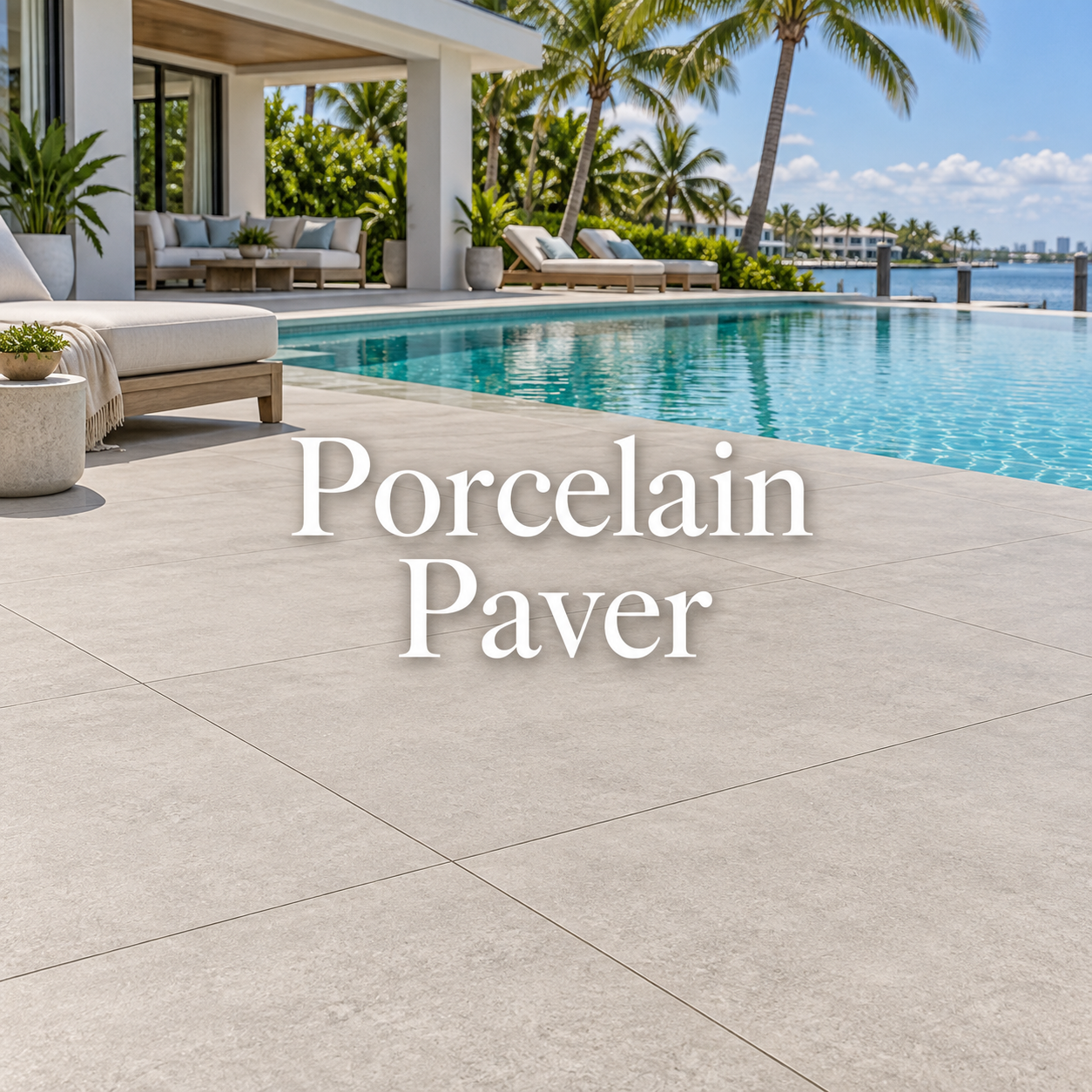
What It Is — Porcelain is a manufactured paver that’s grown a lot more popular recently, mostly because the color and style options are nearly endless — it’s very likely you’ll find a shade you genuinely love.
The Feel — Porcelain typically comes in large-format pieces — 24″x24″ or 24″x36″ — installed with visible polymeric or epoxy grout lines between them, which also happens to make it much harder for weeds to take hold.
Where It’s Used — Porcelain works on driveways, pool decks, patios, and walkways, and it’s also a great option for veneering raised walls on pool features, spas, and outdoor kitchens.
Upkeep — This is where porcelain stands apart: there’s no sealing required, ever. Just clean it when it needs it. The tradeoff is cost — because of the base preparation, spacers, and grout involved in installation, porcelain has the highest price tag on day one of any paver option. But since it never needs resealing, it often becomes the more economical choice over the life of your pool.
Shell Pavers
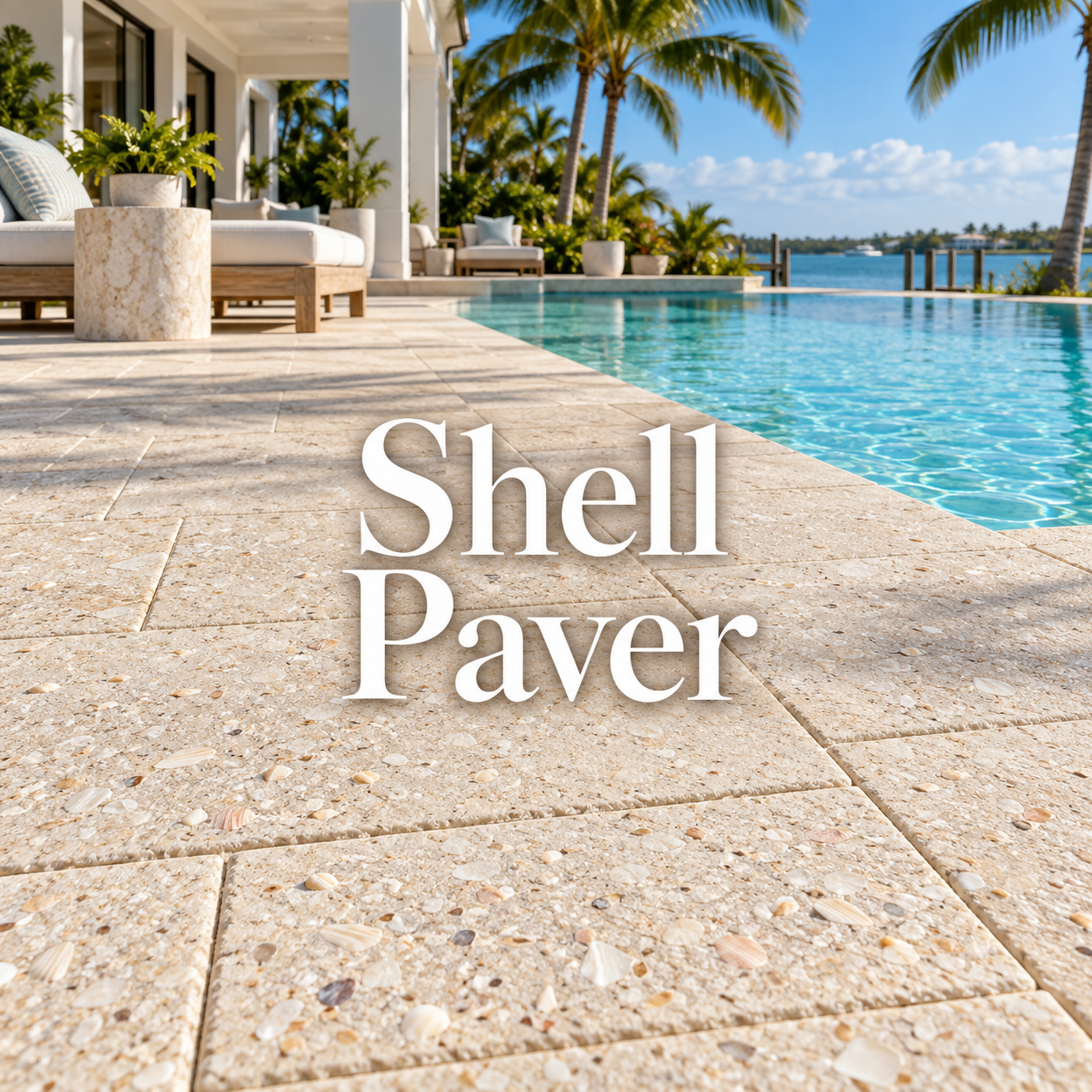
What It Is — Shell pavers are a distinctive, beautiful option for homeowners who want a very specific, unmistakably Florida look in their backyard.
The Feel — They come in a range of sizes, from 4″x8″ up to 24″x24″, giving a lot of flexibility in how they’re laid.
Where It’s Used — Shell pavers work well on pool decks, patios, walkways, and driveways.
Cost — They typically run at or slightly above the price of travertine and marble, but below porcelain.
Upkeep — Pressure clean as needed. Typically, these pavers are not sealed, especially Artistic Paver’s shell product as it is a polished surface and not porous enough to accept a sealer. One thing worth knowing: a pressure washer held too close or set too strong can erode the surface of the paver, so that’s a job worth doing carefully — or having done for you.